Today's Take
On the capital side, OpenAI's valuation has broken through the $850 billion mark, completely shattering the secondary market's pricing anchor and pushing AI asset bubble formation into a new phase. But counterbalancing this is infrastructure fragility: DeepSeek's outage exposed shortcomings in compute stability, while AWS's launch of an Agent governance framework suggests technology is outpacing risk controls. Today's take: Markets are pricing AI to perfection, but uncertainties from technical implementation and geopolitical friction are reshaping risk-reward ratios—don't fixate on valuations while ignoring the foundations.
AI
AI Risk Governance in the Agent Era: AWS Proposes AIRI Framework
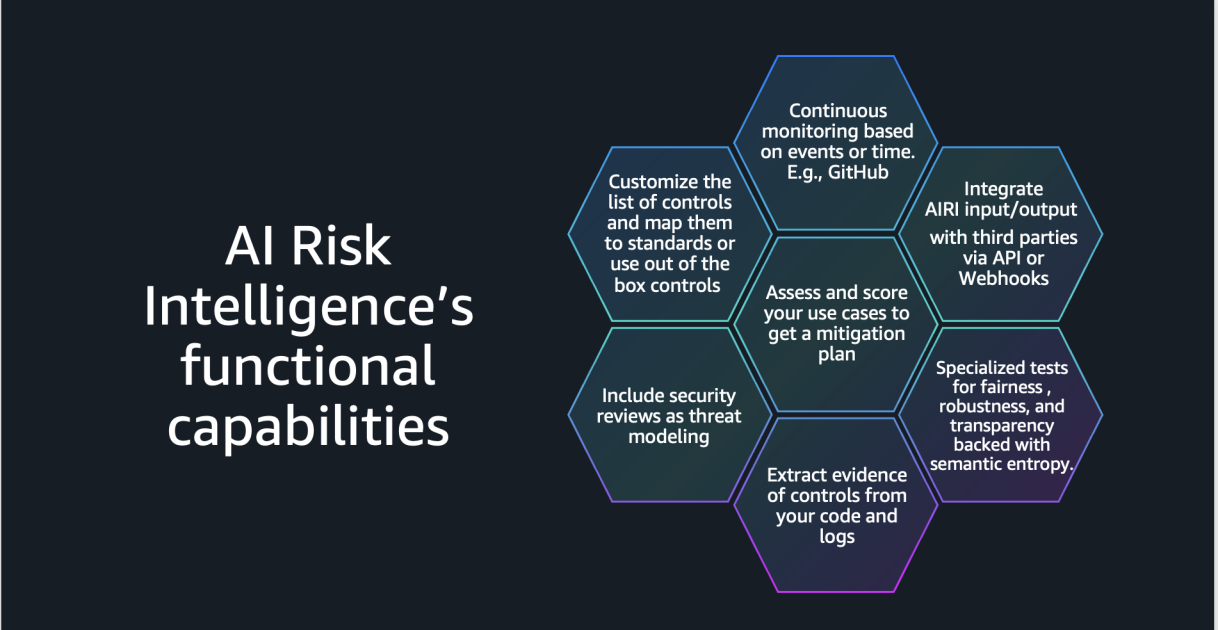
Event: AWS Generative AI Innovation Center proposed the AI Risk Intelligence (AIRI) framework, redesigning collaboration models for security, operations, and governance to address the dynamic characteristics of enterprise-grade agent workloads.
Why it matters: Agentic AI's non-deterministic outputs and dynamic dependencies break through traditional DevOps governance boundaries. Enterprises need to establish new review cycles and risk measurement systems to address the unpredictability brought by agents' autonomous decision-making.
DeepSeek Experiences Three Consecutive Days of Service Disruptions, Longest Outage Exceeds 10 Hours
Event: From March 29 to 31, DeepSeek experienced service disruptions for three consecutive days, affecting web chat, app, and API, with outages lasting approximately 1 hour 48 minutes, 10 hours 13 minutes, and 1 hour 3 minutes respectively. All issues have been resolved.
Why it matters: AI model service stability still struggles to meet traditional cloud service SLA standards. Enterprise application integration requires assessment of single-point failure risks, making multi-model redundancy strategies increasingly necessary.
HackerNews Highlights: Claude Code Source Code Leak and Frequent Supply Chain Attacks
Event: April 1 Hacker News trending topics show: Anthropic's Claude Code source code was leaked via NPM map files, exposing anti-distillation strategies; Axios npm package suffered a supply chain attack planting trojans; GitHub Copilot triggered community backlash and feature rollback after automatically inserting ad links in PRs; Ollama released Apple MLX preview version improving local inference performance.
Claude Code Leak Exposes "Undercover Mode" and Anti-Distillation Details
Event: Due to accidentally including a 57MB source map file in an NPM package, Anthropic leaked 4,756 Claude Code source files in full. Community analysis revealed the KAIROS backend daemon mechanism, sentiment monitoring, the "Capybara" model, and an "undercover mode" capable of hiding AI identity. Although the official team removed the files and took down the GitHub repository, the source code has already spread widely.
Why it matters: The leak reveals specific designs by leading model vendors on system entry points and defense boundaries, particularly strategies using fake tools to contaminate data against model distillation. This provides architectural references for competitors while exposing Anthropic's major oversight in supply chain security auditing.
Claude Code 51.2 Million Lines of Source Code Leak Impacts Competitive Barriers
Event: Due to a basic packaging oversight when publishing an npm package, Anthropic accidentally exposed 51.2 million lines of TypeScript source code for the Claude Code AI programming assistant. This mistake exposed the complete Agent architecture, tool integration logic, and hidden features on GitHub, gaining thousands of Stars. Although the official team attempted DMCA takedowns, mirrors have already spread widely.
Why it matters: This incident substantially weakens Anthropic's technical barriers in the AI Agent field, reducing the difficulty for followers to reverse-engineer its architectural logic, directly affecting the product's valuation anchor. For chasing vendors, this presents an unexpected window to shorten research validation cycles.
AWS Demonstrates QA Automation Using Amazon Nova Act
Event: AWS released a reference solution QA Studio, demonstrating how to use Amazon Nova Act to achieve agent-driven quality assurance automation. The solution allows developers to define tests in natural language, automatically adapt to UI changes, and execute tests reliably at scale in AWS environments through serverless architecture.
Why it matters: Transforming QA from traditional script maintenance to natural language-driven approaches directly changes the cost structure and engineering efficiency of the testing phase. This means maintenance costs from UI changes will significantly decrease, while improving review cycle efficiency for automated testing in CI/CD workflows.
Software Engineering
Encoding Team Standards as AI Infrastructure
Event: Thoughtworks Principal Engineer Rahul Garg posted on the Martin Fowler blog, suggesting that instructions managing AI programming assistant interactions (generation, refactoring, security, review) should be treated as infrastructure, encoding implicit team knowledge into executable instructions through version control and shared artifacts, ensuring consistent code quality regardless of who's at the keyboard.
Why it matters: This perspective transforms "prompt engineering" in the AI era from an individual skill into a team engineering asset, changing R&D cost structure: enterprises need to invest resources in maintaining "prompt infrastructure" to reduce dependency on individual high-level engineers and mitigate quality fluctuation risks from AI-assisted programming.
Score 68 · Source Martin Fowler
Don't Let AI Write Like AI: Training a Personal Writing Assistant with 83 Blog Posts, and Accidentally Creating a Skill
Event: Claude Code - @zp872571679 - I've been tinkering with using AI to assist with writing articles for quite a while, but there's always been one problem I couldn't solve: what comes out doesn't read like I wrote it. The tone is right, the structure is right, but something's off...
Score 68 · Source V2EX - 技术
Ministack Launches Free MIT-Licensed Alternative, Targeting LocalStack Paid Version
Event: Developers released Ministack as a free open-source alternative to LocalStack, supporting 33 AWS services, integrating real Postgres/Redis containers, using MIT license with no registration required.
Why it matters: Ministack fills the ecosystem gap left after LocalStack's commercialization, directly lowering the cost structure of developers' local testing environments, and may shake LocalStack's default distribution power in the local AWS simulation tool space.
Score 58 · Source Hacker News - kerblang
Business
Nike Warns of Further Q4 Performance Decline
Event: Nike management issued a warning that Q4 revenue and earnings will decline further, primarily due to weak demand and intensified market pressure.
Why it matters: Signals of weakening global consumer demand have spread from electronics to core sportswear brands, confirming that the valuation anchor for the consumer discretionary sector remains in a downward revision channel.
Domestic Route Fuel Surcharges to Increase 5x Starting April 5
Event: Colorful Guizhou Airlines notified that starting April 5, domestic route fuel surcharges will be adjusted: routes under 800 km will increase from 10 yuan to 60 yuan, routes over 800 km from 20 yuan to 120 yuan, a 5-fold increase.
Why it matters: The fuel surcharge jump directly pushes up the cost structure of air travel, potentially suppressing short-haul route passenger flow on the demand side and accelerating the shift to high-speed rail, reflecting the restart of airlines' mechanism to pass fuel price fluctuations to end consumers.
Investment & Finance
OpenAI Completes New Funding Round, Valuation Reaches $852 Billion
Event: OpenAI completed this funding round with committed capital totaling $122 billion, up from the previously announced $110 billion, reaching a company valuation of $852 billion.
Why it matters: The valuation anchor for AI startups has been pushed higher again, forming a new reference system for primary market AI project pricing and secondary market AI concept stocks, potentially intensifying capital polarization in the AI sector—where leading projects see valuation expansion while long-tail projects struggle to raise funds.
Score 85 · Source Hacker News - surprisetalk
Policy & Geopolitics
The Economist: US Pressure May Force China to Adjust Strategic Path
Event: The Economist reports that sustained US pressure in trade, technology, and security may force China to adjust foreign policy priorities, shifting to alternative alliances and reshaping regional dynamics.
Why it matters: Pressure for US-China technology decoupling is escalating, with regulatory boundaries tightening continuously. Technology companies relying on global supply chains face higher compliance costs and market uncertainty, requiring reassessment of technology routes and supplier dependencies.
Score 75 · Source 经济学人最新报道
Bloomberg: China's OpenClaw Craze Becomes a Global AI Experiment
Event: Bloomberg reports that China's recent large-scale adoption of Meta's OpenClaw platform has made it an important testing ground for AI technology, demonstrating how large diversified markets can rapidly experiment and iterate on AI applications.
Score 69 · Source 彭博社最新报道
"Liberation Year" Policy Fails to Substantially Improve US Manufacturing Position
Event: The Economist analysis states that despite policy promises of deregulation and anti-trade restrictions, the so-called "Liberation Year" has not brought real freedom to American factories. Manufacturing remains constrained by structural issues, labor conditions are largely unchanged, corporate interests continue to dominate, and reforms have failed to achieve genuine industrial autonomy.
Why it matters: This indicates that pure deregulation has not addressed the core pain points of manufacturing reshoring. For investors, this means investment judgments in this sector cannot rely solely on policy trends—beware the gap between policy rhetoric and actual cost structure improvements.
Score 62 · Source 经济学人最新报道
Social Media
Chinese Brand Wins World Superbike Championship for the First Time
Event: Chinese motorcycle manufacturer Zhang Xue won the Portuguese round of the World Superbike Championship on March 28, leading by nearly 4 seconds, becoming the first Chinese brand to win an international middleweight motorcycle championship.
Score 40 · Source 微信搬运工 - Telegram Channel
Watch Signals
Focus on the resonance of three variables: First, whether leading players accelerate compute infrastructure investment following massive funding, which determines whether application layers can land; second, whether Agent governance standards (like AIRI) can form industry consensus within a month to address the "ungoverned" problem; third, whether "decoupling" risks in open-source ecosystems spread from chips to the model layer under US-China tech competition. These three points will determine whether this is a technology feast or a capital bubble.
More in the Last 24h
The following items entered the candidate pool but did not make it into today's main in-depth analysis section.
AI
- [23:34] 甲骨文在重金押注AI之际大幅裁员 | Wall Street Journal
- [20:05] 费尔南德斯辞职后,巴拉圭任命临时财政部长 | Bloomberg
- [20:03] Show HN: Cerno – CAPTCHA that targets LLM reasoning, not human biology | Hacker News - plawlost
- [20:03] Show HN: PhAIL – Real-robot benchmark for AI models | Hacker News - vertix
- [19:33] [Block公司的多尔西阐述了利用人工智能削减中层管理人员的愿景](https://www.bloomberg.com/news/articles/2026-03-31/block-s-dorsey-outlines-ai-powered-vision-to-cut-middle